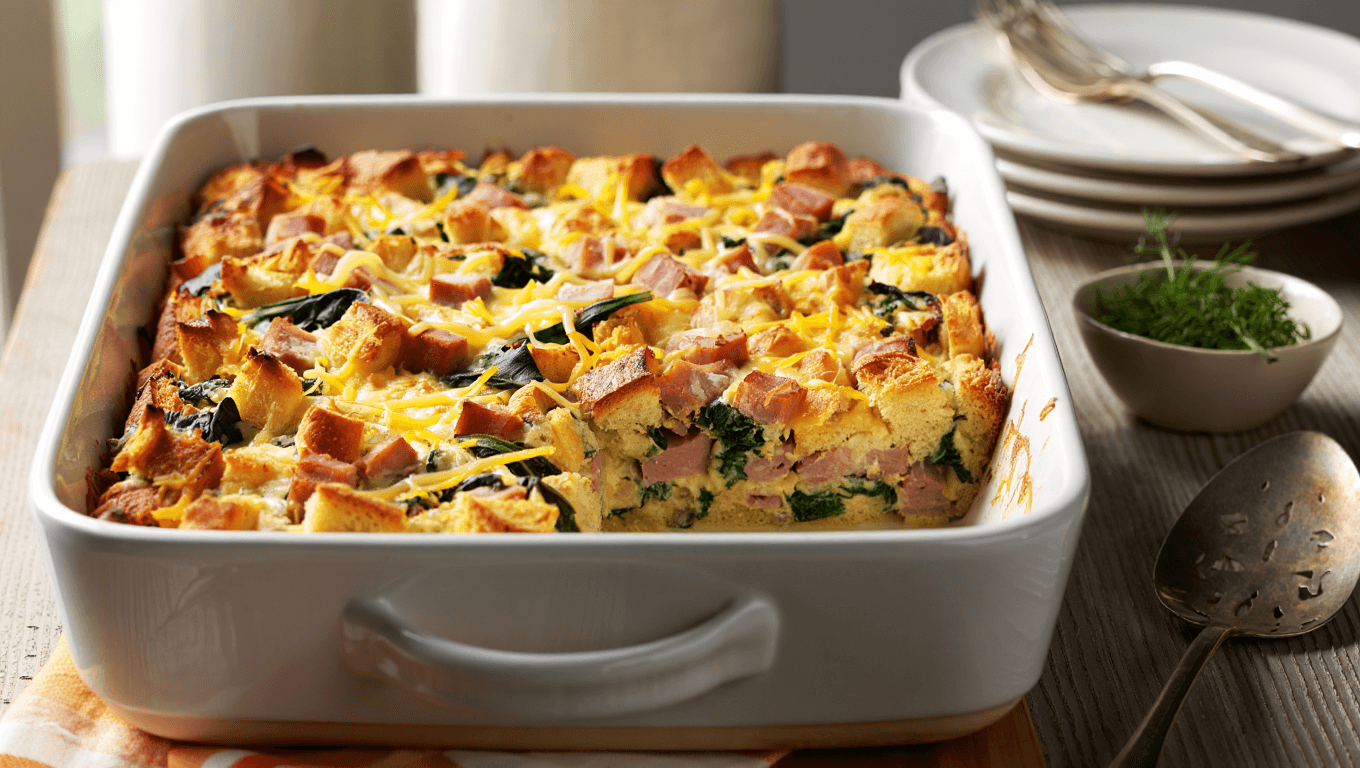
A warm, make-ahead Ham & Swiss strata turns a busy morning into a relaxed brunch without sacrificing flavor. This overnight breakfast casserole layers crusty bread with eggs, melty Swiss, diced ham, and bright vegetables for texture and color. Home cooks appreciate that most of the work happens the night before so mornings stay calm and focused on guests. The recipe scales easily and adapts to whatever you have in the fridge, which makes it a dependable choice for holidays and casual gatherings.
How is strata different from other breakfast casseroles?
How to make a Lucky Lily margarita: spicy tequila and pineapple cocktail recipe
Lavender and honey daiquiri recipe: easy floral cocktail
Strata stands out because it relies on bread soaked in an egg custard rather than a loose egg mixture alone. That soaking step creates a soft, custardy interior with crisp edges that feels more luxurious than a simple scramble. Bakers usually let the assembled dish rest in the fridge for at least an hour and often overnight so flavors meld and the bread absorbs liquid.
Layering plays a key role in texture and flavor. Cubed, day-old bread forms the base and holds the custard without turning mushy when prepared correctly. Cheeses and savory meats like ham add richness while fresh vegetables contribute brightness and structure.
Strata works well for make-ahead meals because the timing shifts away from party hours. Assembly requires little hands-on time and the oven does the rest, which keeps you present with guests rather than juggling last-minute cooking tasks.
Why choose Ham and Swiss for your brunch?
Ham and Swiss make a natural pairing for strata because the cheese melts smoothly and the ham brings a savory, salty backbone. The Swiss cheese adds a gentle nuttiness that complements smoked paprika or ground mustard in the custard. Guests often comment on the contrast between the soft interior and the browned, slightly crisp edges.
If vous are hosting a crowd, this dish becomes a low-stress winner for several reasons:
- Feeds a group easily—one 9×13 pan serves about 10–12 people.
- Make-ahead friendly—assemble the night before and bake in the morning.
- Minimal hands-on time—no sautéing or pre-cooking required.
- Flexible—swap vegetables or cheese to match preferences or what’s on hand.
What ingredients are needed and what can be swapped?
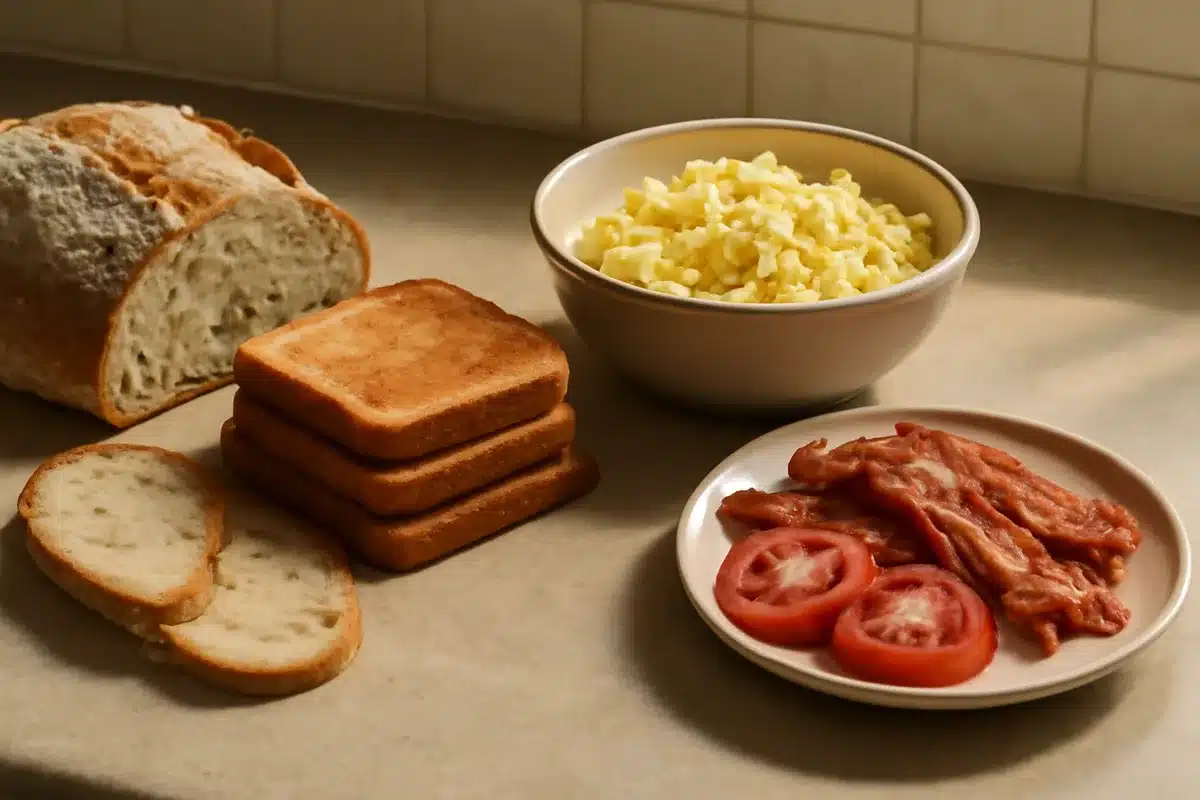
This version features basic, accessible components that deliver maximum flavor. Use sturdy, crusty bread cut into roughly 1-inch cubes, cooked ham, shredded Swiss, eggs, and whole milk for the custard. Aromatics like green onion and spices such as smoked paprika and ground mustard sharpen the profile without overwhelming the other ingredients.
| Ingredient | Amount | Notes |
|---|---|---|
| Day-old bread | 8 cups (≈340 g) | Crusty sourdough or French loaf recommended |
| Cooked ham | 2 cups (≈350 g) | Leftovers or deli ham both work |
| Swiss cheese | 2 cups (≈226 g), shredded | Smoked gouda is a good substitute |
| Eggs | 9 large | Room temperature yields a more even custard |
| Whole milk | 2 cups (480 ml) | Replace up to half with half-and-half for richness |
| Veggies | About 1 cup total | Try peppers, tomatoes, or spinach |
| Seasonings | 1 tsp salt, 1 tsp smoked paprika, 1 tsp ground mustard | Adjust to taste |
Swapping ingredients keeps the strata interesting and adaptable. Vegetarians can remove ham and add another cup of peppers, mushrooms, or cooked spinach. For different flavors, substitute Swiss with Gruyère, cheddar, or smoked gouda while keeping the same cheese volume.
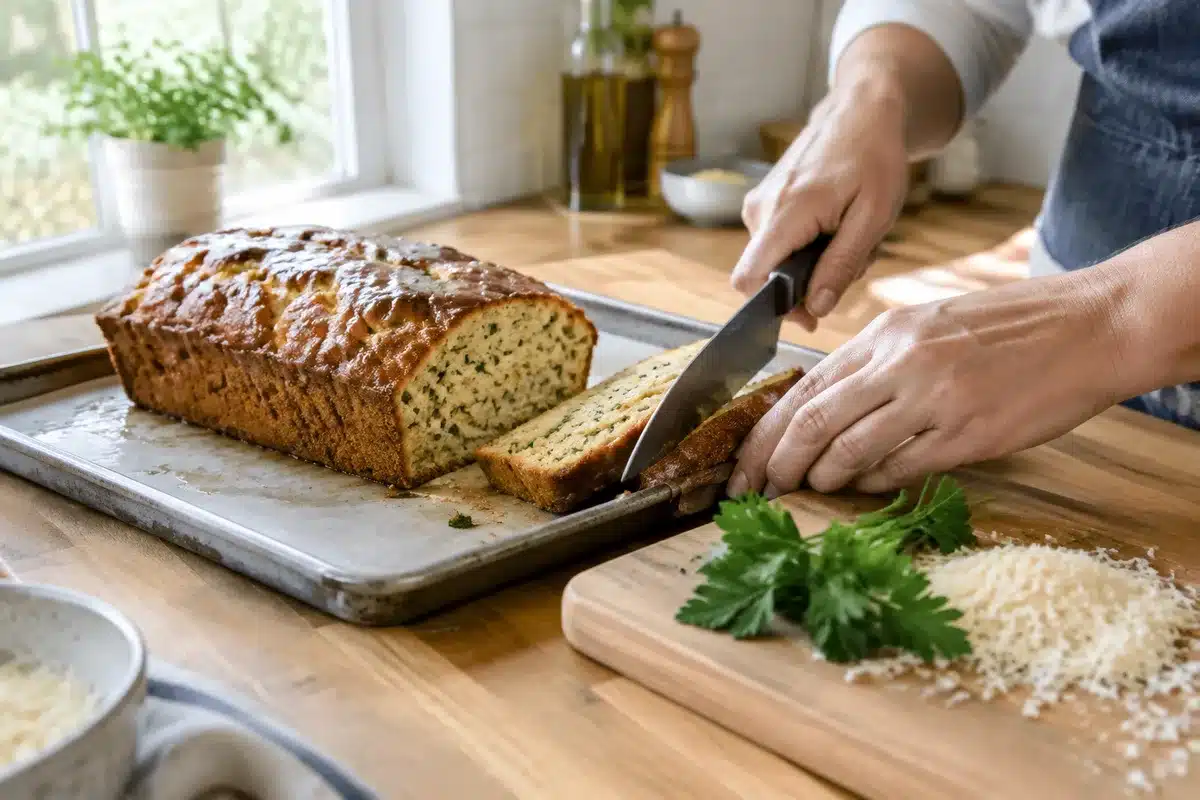
Freshness and texture matter more than matching exact brands. If your bread is soft, let the cubes dry at room temperature overnight or toast briefly at low heat. Stale or slightly dry bread produces the best custard absorption and prevents a soggy result.
How long should you rest bake and store the strata?
Assembly is straightforward: coat a 9×13-inch or 3–4 quart dish, layer the bread, scatter ham and vegetables, and top with shredded Swiss. Whisk eggs with milk and spices, pour the custard evenly over the layers, and sprinkle chopped green onions. Cover and chill for at least one hour; overnight gives the best texture and flavor.
When ready to bake, let the dish sit at room temperature for 10–15 minutes while the oven preheats to 375°F (191°C). Bake uncovered for about 30 minutes, then tent loosely with foil and bake another 15–25 minutes until the sides are golden and the center is set. The strata usually needs around 50 minutes total but check for puffiness and a lightly browned edge.
Leftovers keep well in the refrigerator for up to five days and reheat easily in a microwave or in a 350°F oven until warmed through. Freezing is a great option for make-ahead planning: assemble through the custard pour, wrap tightly with plastic then foil, and freeze for up to three months. Allow the frozen dish to thaw overnight in the fridge, bring to room temperature, and bake as directed.

Miles H. Whitaker writes about breakfast with a calm and practical approach. His recipes are designed for both busy mornings and relaxed starts, focusing on simplicity, comfort, and everyday nourishment.