
The Swiss Kiss blends classic gin brightness with alpine herbal warmth to create an aperitif that feels both refined and slightly unexpected. This cocktail highlights génépy’s floral, resinous character while keeping a lively citrus backbone and a discreet bitter edge, making it a smart choice for an evening starter or a calm nightcap. Recipe searches for a Swiss Kiss often include terms like gin cocktail, génépy cocktail, and sour-style aperitif, and this post covers the exact ingredients, method, and tasting notes you need to make it at home.
What makes the Swiss Kiss unique?
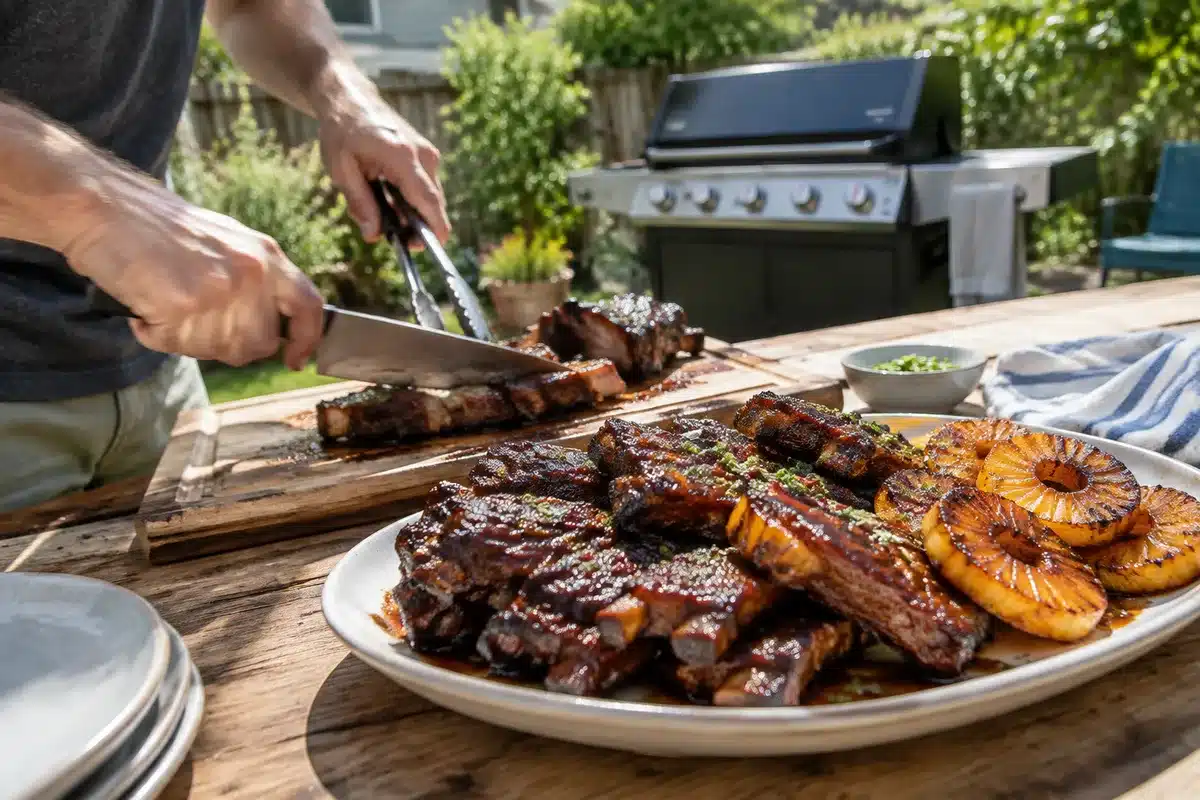
How to make a Lucky Lily margarita: spicy tequila and pineapple cocktail recipe
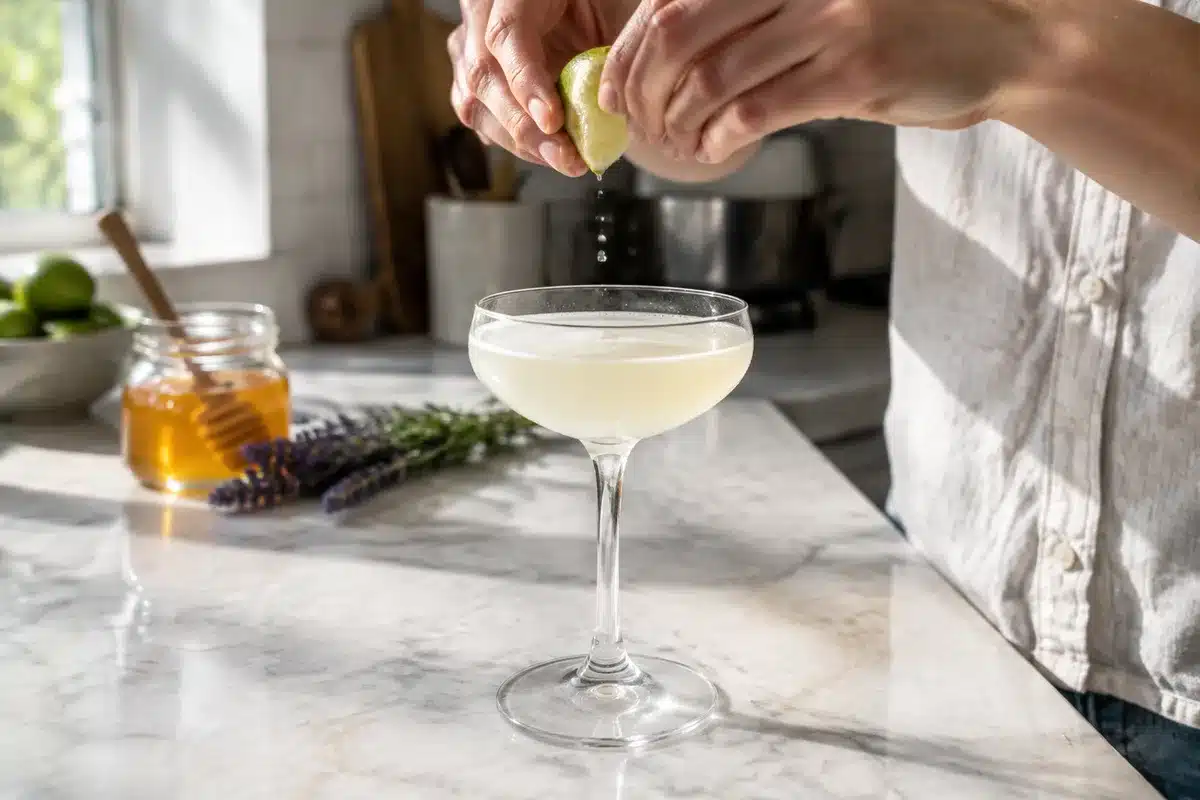
Lavender and honey daiquiri recipe: easy floral cocktail
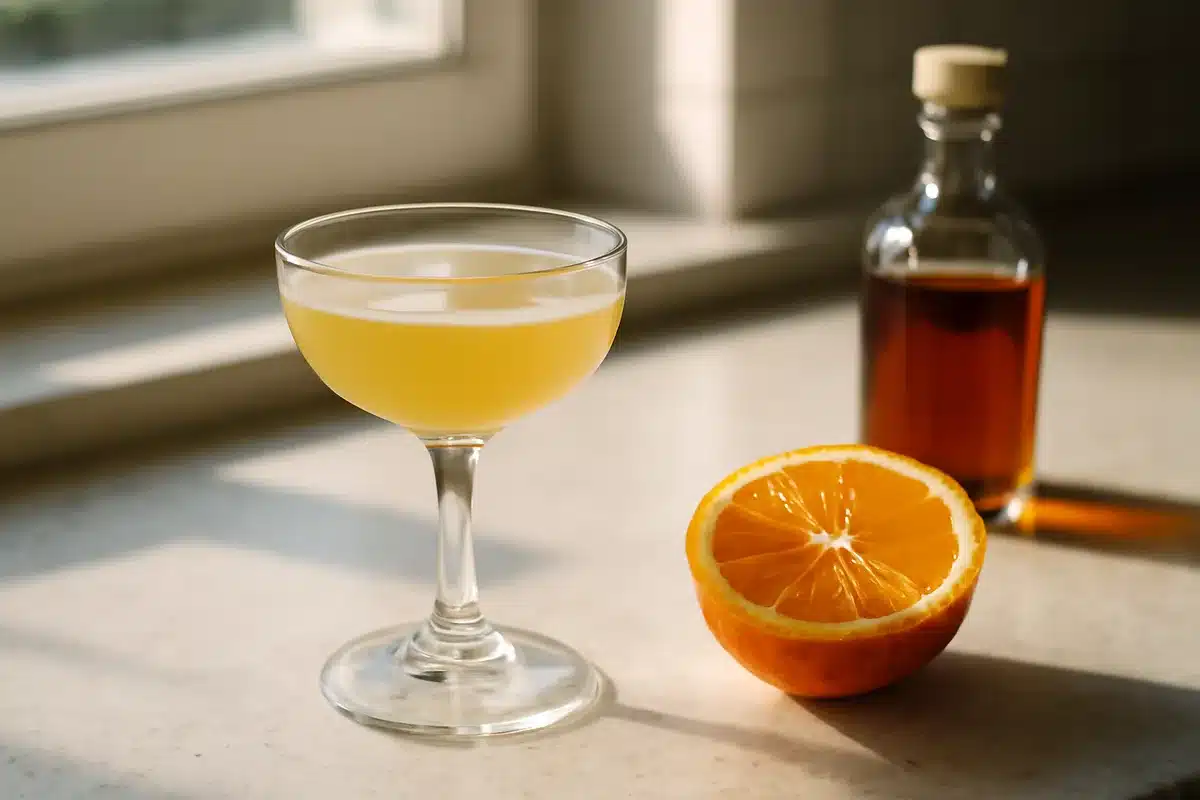
The Swiss Kiss stands out because it pairs London dry gin with Bigallet Génepy, an Alpine herbal liqueur that brings piney and floral notes to the forefront. The interplay between crisp gin botanicals and génépy gives the drink an aromatic lift that you rarely find in standard sours.
Bright lemon juice and a rich sugar syrup keep the balance focused on freshness rather than sweetness, while a dash of Creole-style bitters adds complexity and a whisper of color. A minimal absinthe float finishes the drink with anise-citrus perfume that sits above the surface and invites the first sip.
Which ingredients do you need for one serving?
The list below uses metric measurements commonly found in professional recipes, but I include approximate ounce conversions so you can mix with American jiggers if preferred. Every ingredient matters here because the génépy is aromatic and can dominate if mis-measured.
| Ingredient | Metric | Approx. US fl oz |
|---|---|---|
| London dry gin (e.g., Hayman’s) | 45 ml | 1.5 fl oz |
| Bigallet Génepy Grand Tetras | 15 ml | 0.5 fl oz |
| Fresh lemon juice | 20 ml | 0.7 fl oz |
| Rich sugar syrup (2:1 sugar to water) | 7.5 ml | 0.25 fl oz |
| Peychaud’s or Creole-style bitters | 1 dash | — |
| La Fée Parisienne absinthe (for float) | 1.25 ml | 0.04 fl oz |
If vous want to substitute, choose a clean, juniper-forward gin and an herbal liqueur that leans more floral than medicinal. Avoid heavy, overly sweet amaretti-style alternatives that will flatten the drink’s brightness.
How do you mix and present the Swiss Kiss?
Begin by chilling the serving glass. The recipe works best in an old-fashioned glass filled with fresh ice, which keeps the flavors concentrated while you sip slowly.
Measure the gin, génépy, lemon juice, rich syrup, and bitters into a shaker filled with ice. Shake vigorously until the outside of the shaker feels well chilled, then strain into the prepared ice-filled glass.
Gently float the absinthe on top by slowly pouring it over the back of a spoon so that it forms a thin aromatic layer. Finish by placing a small mint sprig tip in the center of the glass so the herb rests on the surface and releases fragrance as you lean in.
Small presentation tips improve the experience: gently slap the mint between your palms before garnishing for extra aroma, and ensure your lemon juice is freshly squeezed for the cleanest acidity.
What does the Swiss Kiss taste like and how strong is it?
The first sip opens with bright citrus and crisp gin botanicals, then moves into a herbal mid-palate courtesy of the génépy. The absinthe float adds a fleeting anise and floral top note, while the Peychaud’s bitters provide a subtle Creole spice that rounds the finish.
In terms of potency the Swiss Kiss is moderate for a stirred or shaken cocktail. Expect about 21.05% alc./vol. per serving, roughly 1.3 standard drinks, and about 169 calories. The balance keeps the drink approachable while still noticeably boozy.
Who created the Swiss Kiss and how did it originate?
The recipe traces back to bartender Zac Sorensen in Chicago, Illinois, who reimagined elements of the classic sour family by introducing génépy. His version emphasizes Alpine herbal character without sacrificing the bright citrus profile that defines a proper sour.
Since its creation the Swiss Kiss has found favor among bartenders and home enthusiasts looking for an herb-forward aperitif. It sits comfortably alongside other aperitivo and herbal cocktails, and it adapts well to small variations in gin or sweetener.
Try small experiments such as swapping the génépy for a milder alpine liqueur or adjusting the syrup ratio if you prefer a drier sip, and note how those changes alter the aromatic balance.
- Quick tip — Use a 2:1 syrup for a rounder mouthfeel that supports the lemon without making the drink cloying.
- Serving idea — Present the cocktail with a small cocktail napkin and a short explanation of génépy to highlight its unique ingredient profile.

Andrew Cole focuses on everyday drinks, from warm comfort beverages to refreshing options. His writing emphasizes balance, clarity, and ease of preparation.