Smoked tri tip roast delivers big flavor with remarkably little fuss, making it a go-to for backyard cooks and busy hosts alike. A triangular cut with deep beefy notes, tri tip responds beautifully to low-and-slow smoking and a final hot sear that builds a caramelized crust. Minimal seasoning and steady heat let the meat and smoke speak, while a quick rest before slicing preserves juices and tenderness. This guide covers practical steps for a perfect smoked tri tip, including equipment, timing, and slicing tips so you can serve reliably delicious results.
What exactly is tri tip and what size should you buy?
How to make a Lucky Lily margarita: spicy tequila and pineapple cocktail recipe
Lavender and honey daiquiri recipe: easy floral cocktail
Tri tip comes from the bottom sirloin and wears its shape on its sleeve — a triangular roast that cooks evenly when handled properly. Markets may label it differently, such as Santa Maria roast, bottom sirloin, or triangle roast, so check the shape rather than relying only on the name. A typical whole tri tip weighs between 2 and 3 pounds, which suits a family dinner and fits well on most smokers.
Purchasing a 2–3 pound piece usually feeds 5–8 people when sliced thinly against the grain. If you plan sandwiches or charcuterie-style servings, smaller roasts or trimming into steaks will work. Remember that marbling and thickness matter more than name: pick a roast with even thickness and some visible fat for the best smoke and crust development.
Which seasonings and equipment produce the best results?
A simple rub unlocks the cut’s potential without masking smoke flavor. Classic options include coarse kosher salt, cracked black pepper, and granulated garlic. Pre-mixed steak seasonings also work well and save prep time; the roast needs only a light coating to shine.
Essential equipment remains minimal: a wood or pellet smoker, a reliable digital thermometer, and a heavy skillet or grill for the final sear. You may choose oak, hickory, or fruit woods for pellets depending on your taste; none will overpower when used at moderate smoking temperatures. If vous plan to skip the skillet, preheated grill grates make a fine substitute for the finishing sear.
- Ingredients: 1 tri tip (2–3 lb), 1 tbsp oil, 2 tbsp steak seasoning (or salt & pepper), 2 tbsp butter.
- Equipment: pellet or wood smoker, digital instant-read thermometer, cast iron or heavy-bottom skillet, foil.
How should you smoke and finish the tri tip?
Begin by preheating the smoker to 225°F (107°C) and positioning the roast on a cutting board. Lightly coat the meat with a few teaspoons of oil to help the seasoning adhere, then rub the seasoning evenly over all sides. Avoid heavy wet marinades; the goal is a dry surface that forms a good bark while smoking.
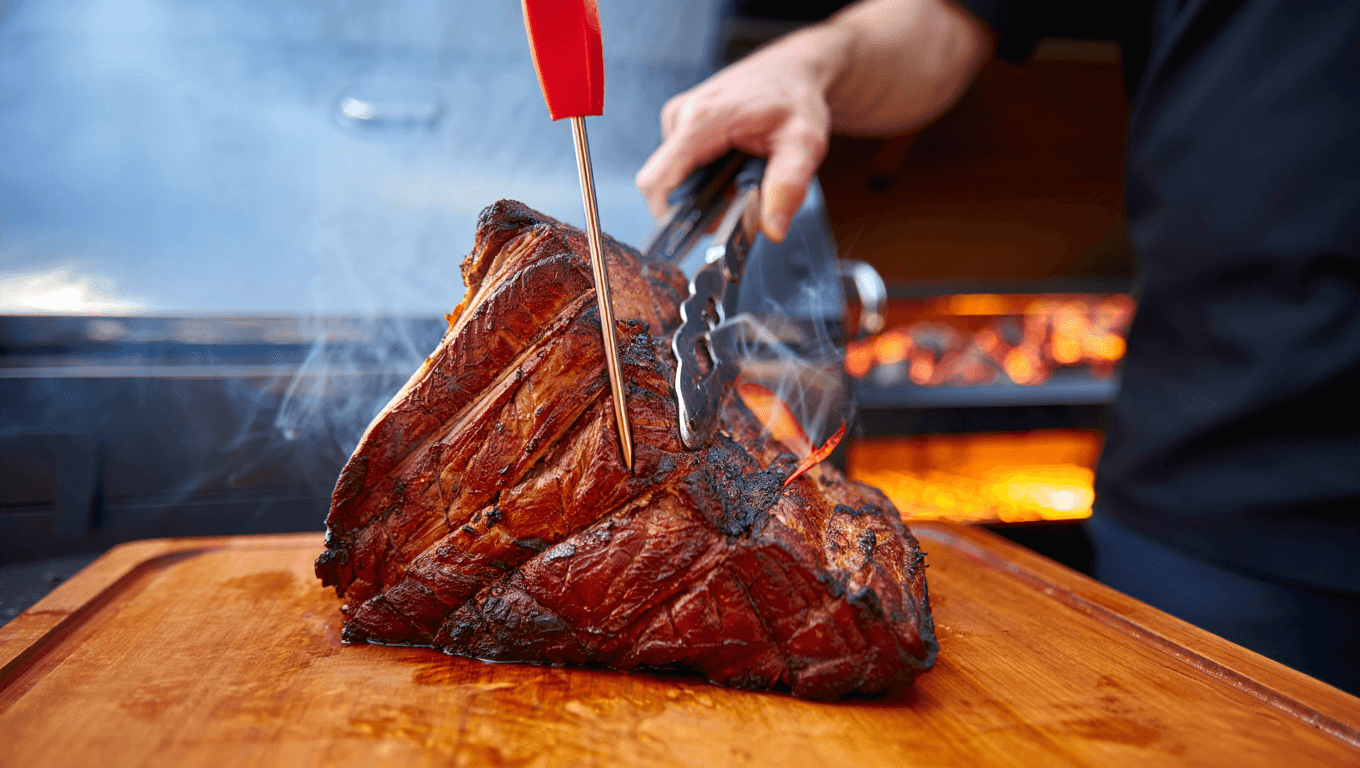
Place the tri tip in the smoker and monitor internal temperature with the digital probe. Aim for an internal temp of 130–135°F (54–57°C) for medium-rare; meat becomes noticeably firmer past that range and tenderness declines. Smoking time usually averages about 30 minutes per pound but depends on smoker consistency and ambient conditions.
Finish with a reverse sear for a glossy, caramelized crust. When the roast reaches the target temperature, heat a cast iron skillet over high heat until it smokes slightly, add a couple pats of butter, and sear the roast for one to two minutes per side. Quick searing locks in juices and creates an appealing color; if the meat ran a bit hot, sear only the exterior surface to avoid overcooking the interior.
Wrap the roast loosely in heavy-duty foil and rest for about 10 minutes before slicing. Resting lets the juices redistribute and the internal temperature settle so slices stay moist and tender.
How do you slice, store and reuse leftovers?
Proper slicing transforms a great roast into an exceptional plate. Locate the grain of the meat and cut against it at a slight angle for the most tender bite. Be aware that the grain changes direction across the triangular roast; adjust your cutting line when you reach the thicker end so every slice runs across, not along, the muscle fibers.
Store leftovers in an airtight container in the refrigerator and consume within 3–4 days. Thin slices reheat well and make superb sandwiches, salads, or grain bowls. Pour any accumulated juices or the reserved butter from the sear over sliced portions for extra flavor.
Quick guide on temperatures, timing and serving suggestions
Use this table as a practical reference during cooking and finishing for consistent results.
| Stage | Target | Typical Time | Notes |
|---|---|---|---|
| Smoker temperature | 225°F (107°C) | 30–90 minutes | Depends on roast size and smoker; consistent heat matters most |
| Internal doneness | 130–135°F (54–57°C) | Approx. 30 min per lb | Remove at lower temp if you prefer rarer meat |
| Reverse sear | High heat skillet or hot grill grates | 1–2 min per side | Use butter for flavor and color; avoid long sear times |
| Resting | 10 minutes | — | Wrap in foil to retain warmth and redistribute juices |
What about common questions and troubleshooting?
Flavor experimentation works well with tri tip because the cut carries smoke and spices without overpowering them. Try coarse rubs, coffee-based blends, or simple salt-and-pepper profiles to learn what matches your palate. Keep seasoning moderate so the smoke remains a clear note rather than a background texture.
If you do not own a smoker, the grill method yields nearly identical results. Start with a higher direct heat sear, then move the roast to indirect heat and maintain a temperature around 225°F. A reliable digital thermometer becomes even more important in that setup to prevent opening the lid too often and losing heat.
When you lack a cast iron pan, any heavy-bottom skillet or preheated grill grates will create the necessary crust. Save the pan juices and melted butter and spoon them over sliced meat during resting for additional richness. Small adjustments like these preserve tenderness without complicating the technique.

Jonathan Pierce specializes in approachable main dishes for everyday family meals. His writing emphasizes clarity, structure, and reliable recipes that are easy to recreate at home.