
Nothing sets a celebration apart like a perfectly roasted prime rib, and mastering this cut will give you a centerpiece that is both impressive and reliably delicious. You can achieve a tender, juicy rib roast with a simple garlic and rosemary rub, careful salting, and a straightforward oven strategy that emphasizes temperature over guesswork. This rib roast recipe includes tips for buying the right cut, the equipment you absolutely need, and how to make a flavorful au jus from the pan drippings. With a few clear steps you will feel confident serving an elegant roast that tastes like a restaurant dish at home.
How do you choose the best rib roast?
Start by deciding between Prime and Choice grade based on flavor and budget. Prime delivers more marbling and a richer mouthfeel, while Choice still offers great tenderness for a lower price. Most home cooks find Choice to be excellent value.
How to make a Lucky Lily margarita: spicy tequila and pineapple cocktail recipe
Lavender and honey daiquiri recipe: easy floral cocktail
Consider whether you want a bone-in standing rib roast or a boneless roast. Bone-in roasts look dramatic and can give a subtle flavor boost, but they require a little more work when carving. Boneless roasts carve more easily and often cook a bit faster.
Plan portions around roughly one pound per guest or about two people per rib when estimating. If vous are serving a crowd and want generous leftovers, add 10–20 percent more. Don’t hesitate to ask your butcher for help trimming or tying bones for easier cooking and presentation.
What ingredients and tools are essential?
Keep the seasoning simple so the beef flavor can shine. You will need kosher salt, freshly ground black pepper, minced fresh garlic, and chopped fresh rosemary for the rub. Optional items that elevate the pan juices include onions and a packet of au jus mix.
The right equipment makes the difference. Use an oven-safe roasting pan, a rack or sturdy onion slices as a makeshift rack, and an instant-read digital thermometer to monitor internal temperature. A fat separator helps when finishing the au jus but is not required.
- Ingredients: rib roast (6–8 lb recommended), kosher salt, olive oil, garlic, rosemary, onions, beef broth, au jus mix.
- Equipment: roasting pan, oven rack or onion slices, instant-read thermometer, fat separator (optional).
What is the step-by-step method for a juicy prime rib?
Remove packaging and set the roast on a rack or on thick onion slices placed in the roasting pan. Generously season with kosher salt, using about ½ to 1 teaspoon per pound; then refrigerate uncovered for at least one hour or up to 24 hours to dry-brine the exterior. The resting time helps the salt penetrate and improves browning during roasting.
Preheat the oven to 475°F for an initial sear. Combine olive oil, minced garlic, black pepper, and chopped rosemary to form a paste, then rub it over the entire roast. Place the roast on the rack or onions and pour 1–2 cups of beef broth into the pan so drippings do not burn.
Roast at 475°F for 15 minutes to develop a rich crust, then reduce the oven temperature to 325°F and continue roasting until your thermometer reaches the chosen pull temperature. Rely on internal temperature, not time, although rough timing often falls between 13 and 20 minutes per pound depending on oven and roast size.
Transfer the roast to a cutting board and tent loosely with foil for 20–30 minutes before carving. While the meat rests, deglaze the pan, remove excess fat from the drippings, and prepare your au jus. Slice the roast across the grain for boneless or remove bones before slicing a bone-in roast, then serve with the warm au jus on the side.
When should you remove the roast from the oven?
Pulling the roast at the correct temperature is the key to consistent doneness because carryover cooking raises the internal temperature during resting. Aim for pull temperatures that are a few degrees below your target final doneness so the roast finishes perfectly without overcooking.
| Desired Doneness | Pull Temperature (°F) | Notes |
|---|---|---|
| Rare | 120°F | Very red center, soft texture |
| Medium Rare | 125°F | Recommended for the classic prime rib experience |
| Medium | 130°F | Pink center with slightly firmer texture |
| Well Done | 145°F+ | Not recommended for this cut due to loss of tenderness |
How do you finish the au jus and carve like a pro?
While the roast rests, scrape the bottom of the pan to loosen browned bits and strain the drippings through a fat separator. Heat reserved drippings with the au jus mix or a simple reduction of beef broth, tasting and adjusting salt as needed. Use a spoon to add only the amount of pan juices you want so the sauce complements the meat without overpowering it.
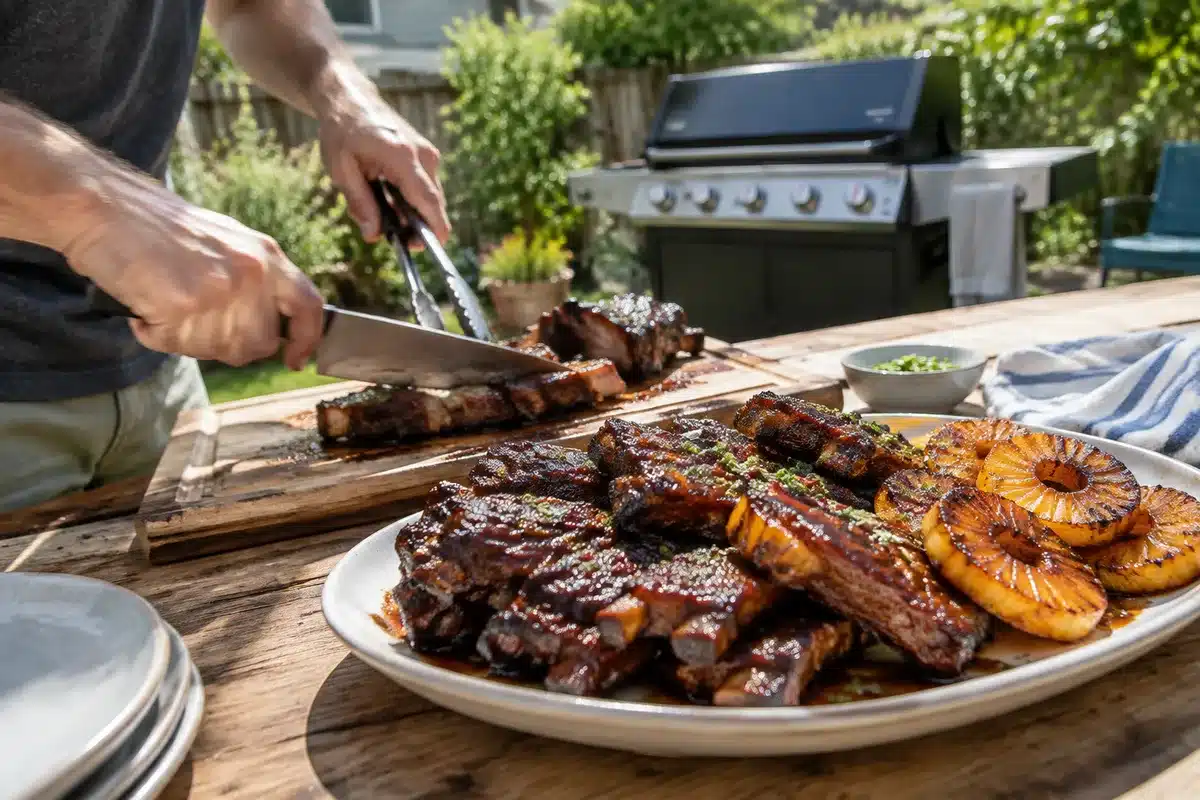
For carving, use a long, sharp slicing knife and remove bones first for bone-in roasts. Slice against the grain in even, confident strokes for uniform portions. If the bones were attached for presentation, you can ask the butcher to remove them before cooking or detach and re-tie them for a dramatic table display.
Serve with these simple finishing touches that make a difference:
- Warm the serving platter so slices stay hot longer.
- Offer coarse kosher salt at the table for final seasoning.
- Provide au jus in a warmed gravy boat alongside horseradish if desired.

Jonathan Pierce specializes in approachable main dishes for everyday family meals. His writing emphasizes clarity, structure, and reliable recipes that are easy to recreate at home.