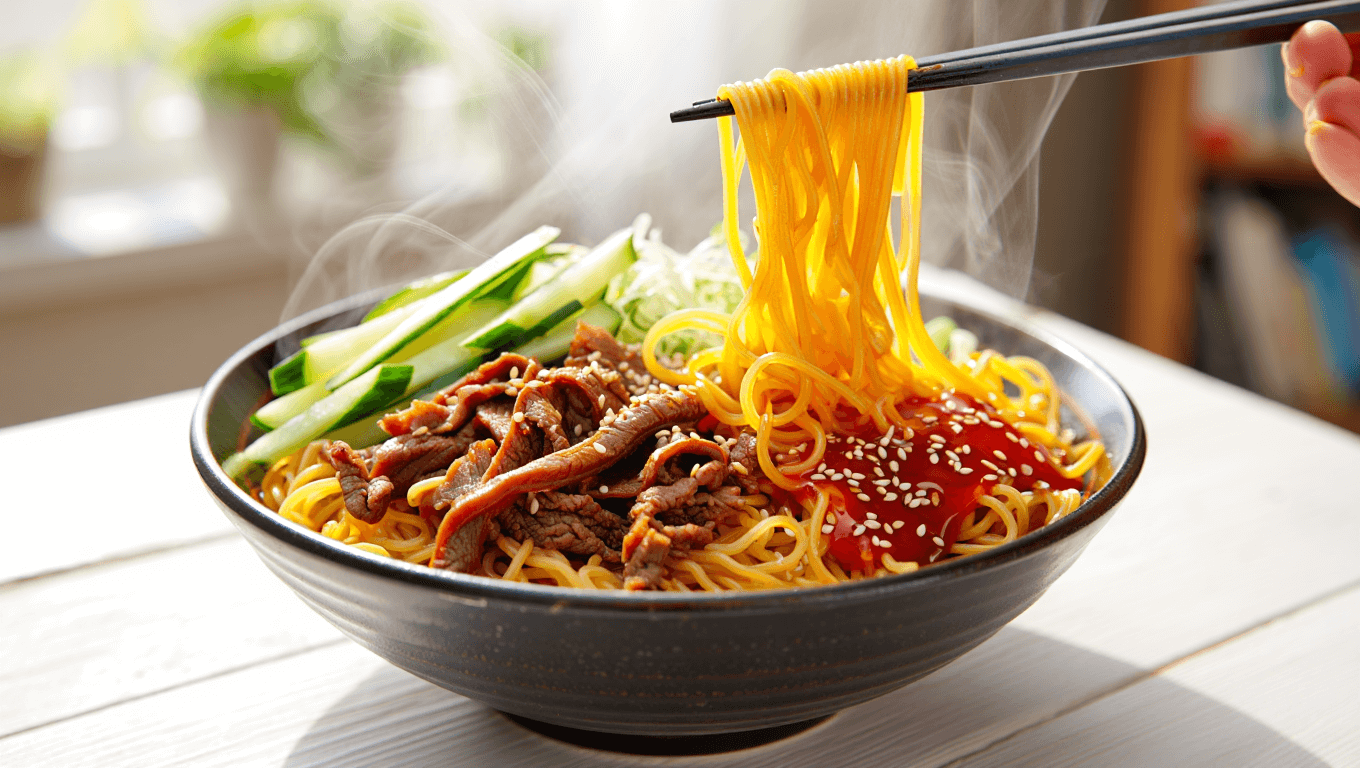
Weeknight dinners rarely hit the sweet spot between fast, family-friendly, and impressive, but these Korean beef noodle bowls check every box. They pair thinly sliced sirloin and a bright, slightly spicy sauce with ramen noodles and crisp cucumber for a meal that comes together in under thirty minutes. Fresh ginger, garlic, and a touch of gochujang lift the flavors while textures bounce between chewy, crunchy, and saucy. This recipe works whether vous are feeding picky eaters or entertaining friends on short notice.
Which ingredients give these bowls their signature taste?
Comment préparer le Mar del Plata, aperitivo au gin sec aux agrumes et herbes ?
How to meal prep air fryer chicken breasts for easy healthy lunches?
Start with a simple base: thinly sliced sirloin or ground beef, ramen noodles, and aromatics like garlic, onion, and ginger. The sauce blends soy, sesame oil, brown sugar, and a splash of sriracha for balanced heat. Gochujang adds the characteristic sweet-spicy depth and is worth seeking out at most grocery stores or online.
Fresh elements make a big difference at the finish. Thin cucumber slices and chopped green onions provide cool contrast, while sesame seeds offer a nutty crunch. You can keep the seasoning mild for kids or turn up the gochujang if adults want more heat.
Here is a compact ingredient reference for four servings that you can keep open while cooking.
| Amount | Ingredient | Note |
|---|---|---|
| 1 pound | Sirloin steak, thinly sliced | Or substitute ground beef |
| 2 packages | Ramen noodles | Discard seasoning packets |
| 1/4 cup | Soy sauce | Use coconut aminos for gluten-free |
| 1 tbsp | Brown sugar | Balances the heat |
| 1 tsp | Sesame oil | Adds toasty aroma |
| To taste | Gochujang | Recommended for authentic flavor |
How do you cook these Korean beef and ramen bowls step by step?
Begin by whisking the sauce in a small bowl so everything is ready when the beef finishes cooking. Heat a skillet, sear the beef quickly, then add the onion, garlic, and grated ginger until fragrant. Bring a pot of water to a boil and cook the ramen until just tender, then rinse under cold water to stop cooking.
Return the skillet to low heat, pour the sauce over the beef, and let it simmer briefly so flavors meld. Add drained noodles to the pan and toss gently until coated. Divide into bowls and top with cucumber slices, green onions, sesame seeds, and a drizzle of gochujang if you like extra heat.
Keep these timing tips in mind for a 30-minute dinner rhythm.
- Prep sauce and slice beef while water heats, 5–10 minutes.
- Cook noodles 2–3 minutes and sear beef 5–7 minutes total.
- Finish by combining and garnishing, 3–5 minutes.
Working in parallel saves time, and cooking the noodles last keeps them springy and separate from the sauce until serving.
What quick substitutions and shortcuts preserve the flavor?
Ground beef is a simple swap for sliced sirloin and shortens prep time because no slicing is needed. You can also use pre-minced garlic and jarred ginger in a pinch, though fresh aromatics always taste brighter. If vous want lower carbs, serve the beef and sauce over cauliflower rice or zucchini noodles instead of ramen.
A note on gochujang: it is the most important single ingredient for the dish’s character. If you cannot find it, mix a teaspoon of miso with a bit of honey and chili paste as a stopgap, but expect a different profile. Gluten-free versions of gochujang and ramen exist, and coconut aminos work well in place of soy sauce.
How should leftovers be stored and reheated?
Place leftovers in an airtight container and refrigerate promptly. The beef and sauce keep well for 3 to 4 days, while noodles maintain a better texture if kept separate when possible. If you plan to eat meals over a few days, portion the beef and sauce into containers and store noodles in another container.
Reheat gently on the stovetop over medium-low heat with a splash of water to loosen the sauce. Microwaving works as well; reheat in short bursts, stirring between intervals so the noodles do not overcook. Add fresh cucumber and green onions after reheating to restore crunch and brightness.
For freezing, transfer the cooled beef and sauce into freezer-safe containers. Thaw overnight in the fridge and warm on the stove; fresh noodles freeze poorly and are best cooked fresh.
Frequently asked questions about make-ahead, gluten-free options, and timing?
Can you prepare elements ahead of time? Yes. Make the beef and sauce up to three days ahead and store them chilled. Cook noodles right before serving and toss everything together just until warmed through for best texture.
Is a gluten-free version possible? Absolutely. Use gluten-free ramen or rice noodles and swap soy sauce for coconut aminos. Look for a certified gluten-free gochujang or use a gluten-free chili paste alternative and adjust sweetness to taste.

Jonathan Pierce specializes in approachable main dishes for everyday family meals. His writing emphasizes clarity, structure, and reliable recipes that are easy to recreate at home.