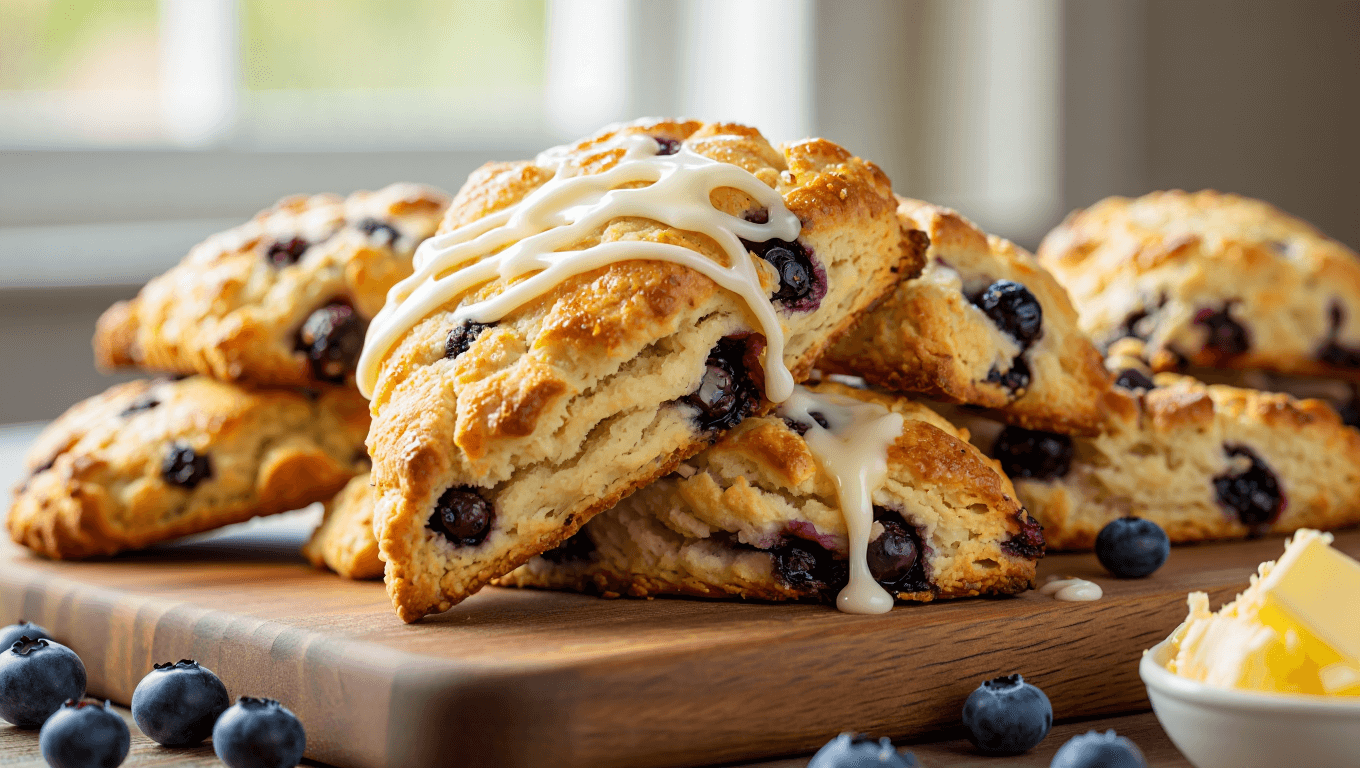
Warm, buttery, and studded with juicy blueberries, these scones deliver a bakery-quality start to any morning without the fuss. The recipe balances a crisp, golden exterior with tender, flaky interiors and finishes with a drizzle of creamy vanilla icing that seeps into every crack. You will find practical tips on keeping the dough cold, handling frozen berries, and achieving that signature crumbly edge so you can bake consistently excellent blueberry scones at home.
Why do these blueberry scones outperform bakery versions?
Top 20 St. Patrick’s Day cocktail recipes: easy green drinks for parties
Creamy Cajun pasta recipe with peppers and smoked sausage
Many commercial scones sacrifice texture for shelf life and speed. These homemade blueberry scones focus on contrast between a crunchy outer crust and a soft, layered center by keeping the fat cold and the work minimal. That contrast creates a pastry that feels premium while still being simple to make. Expect bright blueberry bursts and a buttery mouthfeel rather than the dry, dense triangles you may have tried before.
A final brush of cream and a sprinkle of coarse sugar add a golden sheen and extra crunch. The optional vanilla icing brings a creamy sweetness that complements the fruit without overpowering it. For the best results, serve them warm so the flavors and textures shine.
One reader review described these as “melting in the mouth” and awarded the recipe five stars. If vous are sharing a tray with friends, you will likely hear the same praise. Small technique adjustments make a big difference, which is why the method below emphasizes cold butter and short mixing times.
Which ingredients produce the best blueberry scone results?
Quality starts with simple components arranged for maximum effect rather than complexity. Use all-purpose flour, a modest amount of sugar, a reliable rising agent, and a pinch of cinnamon for warmth. The fat and liquid choices are the real game changers here: frozen butter grated into the dough yields flakiness, and heavy cream provides richness and steam for lift.
| Ingredient | Amount | Notes |
|---|---|---|
| All-purpose flour | 2 cups (250 g) | Spoon and level for accuracy |
| Granulated sugar | ½ cup (100 g) | Adjust slightly if you want less sweetness |
| Baking powder | 2½ tsp | Fresh is best for lift |
| Ground cinnamon | 1 tsp | Optional but recommended for warmth |
| Salt | ½ tsp | Enhances flavor balance |
| Unsalted butter | ½ cup (113 g), frozen | Grate while frozen for best texture |
| Heavy cream | ½ cup (120 ml) plus 2 tbsp for brushing | Substitute buttermilk or full-fat coconut milk for variation |
| Egg | 1 large | Adds structure and color |
| Vanilla extract | 1½ tsp | Pure extract improves aroma |
| Blueberries | 1 heaping cup (140 g) | Fresh preferred; do not thaw if using frozen |
How does frozen grated butter change the scone texture?
Cold butter creates pockets of fat in the dough that melt during baking and produce steam. Those expanding pockets form flaky layers and prevent the scones from becoming uniformly dense. If the butter warms while you work, the dough will lose those discrete layers and spread more in the oven.
Grating the butter while frozen makes the pieces very small and uniform. Smaller pieces mix quickly into the flour without overworking the dough and help keep the exterior crisp while the center stays tender. Remember that the finer the cold butter, the less the scones will spread during baking.
What is the step by step method for moist blueberry scones?
Begin by preheating the oven while you prepare the dough so everything moves smoothly. Whisk the dry ingredients in a large bowl, then add the grated frozen butter and work it in with a pastry cutter until the mixture resembles coarse crumbs. Chill the dry mixture briefly if your kitchen is warm while you prepare the wet components.
Whisk the heavy cream, egg, and vanilla together and pour into the flour-butter mixture. Gently fold in the blueberries until the dough looks moistened but still slightly shaggy. Use floured hands to bring the mixture together on a lightly floured surface and press into an 8-inch disc about 1 inch thick.
- Brush the tops with the reserved heavy cream and sprinkle coarse sugar for a crackly finish.
- Chill the shaped wedges for at least 15 minutes to prevent over-spreading and improve flakiness.
- Bake at a high temperature until the edges are golden and the tops are lightly browned, about 22–25 minutes at 400°F (204°C).
Can these scones be frozen or made ahead?
Yes, these scones freeze beautifully and are convenient for make-ahead breakfasts. Freeze shaped uncooked wedges on a tray until firm, then transfer to a labeled bag and bake from frozen with a few extra minutes of time. Alternatively, assemble through shaping, refrigerate overnight, and bake in the morning for fresher results.
Baked scones should be cooled before freezing and stored without icing for best results. Reheat gently in a low oven or microwave briefly, then add the vanilla icing if desired. The texture and flavor hold up well, making this scone recipe a practical option for meal prep and entertaining.


Miles H. Whitaker writes about breakfast with a calm and practical approach. His recipes are designed for both busy mornings and relaxed starts, focusing on simplicity, comfort, and everyday nourishment.